


 cxl@jihengfeng.com
 Español
 Français
 日本語
日本語
 العربية

- Blow Molding Die and Equipment Compatibility Adjustment: Technical Measures to Improve Production Stability
- Key Factors for Extending the Lifespan of Blow Molding Dies: 5 Essential Points to Avoid Common Operational Mistakes
- Stretch Blow Molding Dies vs. Extrusion Blow Molding Dies: Process Differences and Application Scenarios Comparison
Blow Molding Tooling - Machining Equipment Showcase
- Category:Production equipment
- Hits:163次
- Release Date:2025-08-19
- Share:
- Details
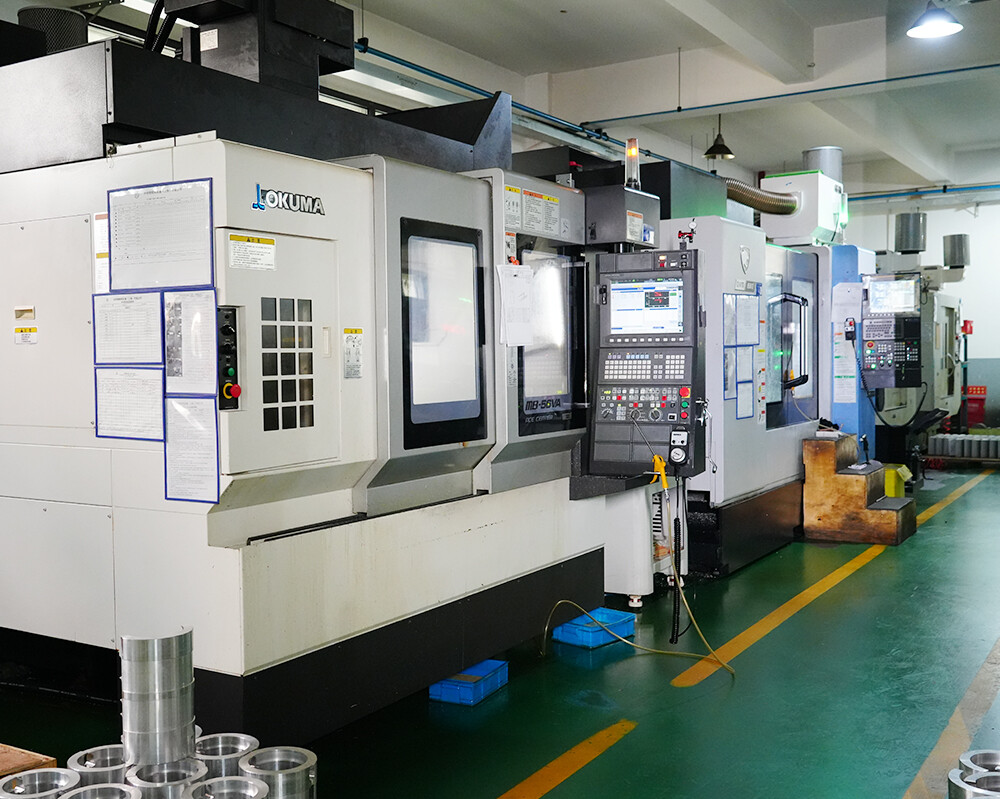
In the manufacturing system of packaging machinery components, the machining capability of a single piece of equipment often fails to achieve full coverage of a part's geometric features. The structure of high-end spare parts typically integrates complex spatial surfaces, deep hole systems, and precision rotary bodies. This requires us to break through the limitations of single-machine operations and establish an equipment matrix encompassing turning, milling, drilling, and electrical discharge machining (EDM). The cutting rigidity, spindle characteristics, and control systems of different brand machines each have their own emphases; the logic of the matrix lineup is to ensure every machining feature is matched with the most appropriate cutting parameters and locating datums.
To address the requirements of complex 3D surfaces in blow mold cavities and the trajectories of filling machine cams, we have configured Mazak 5-axis, Makino 4-axis, and Beijing Jingdiao 5-axis machining centers, paired with Okuma spindle systems for rough and finish machining. The core engineering value of multi-axis synergy lies in reducing the number of workpiece clamping times, thereby avoiding datum deviations caused by secondary positioning. It is precisely by relying on this coordinated multi-axis cutting capability that we can stably undertake the manufacturing of molds and spare parts for blow molding machines, filling machines, and labeling equipment that are compatible with brands such as Sidel, Krones, KHS, and Tetra Pak, ensuring that the geometric tolerances of these core structural components remain within a strictly convergent range during high-speed dynamic operation.
For the processing of rotary parts, the American Hardinge CNC lathe and the Doosan mill-turn center undertake the machining tasks of components like precision valve cores and center columns. The process significance of mill-turn machining is to merge turning and milling operations into one, fundamentally controlling concentricity and perpendicularity errors. Regarding the special process bottlenecks in mold manufacturing, the Swiss Charmilles mirror-finish EDM is specifically deployed to handle narrow gaps and sharp internal corners in cavities. Its resulting surface roughness can directly reach a polish-free state, eliminating the risk of surface profile distortion caused by manual polishing. Meanwhile, the German imported deep hole drilling machine specifically tackles cooling channel machining with extreme length-to-diameter ratios, ensuring hole wall straightness and preventing deviated flow of the cooling medium within the deep holes.
The essence of this multi-brand, multi-process integrated equipment matrix is the internalization of subcontracted operations. By compressing the process chain, we effectively cut off the tolerance amplification effect brought about by intermediate transfers, ensuring the final dimensional accuracy of complex molds and components is entirely controlled within our internal machining closed-loop.


