


 cxl@jihengfeng.com
 Español
 Français
 日本語
日本語
 العربية

- Blow Molding Die and Equipment Compatibility Adjustment: Technical Measures to Improve Production Stability
- Key Factors for Extending the Lifespan of Blow Molding Dies: 5 Essential Points to Avoid Common Operational Mistakes
- Stretch Blow Molding Dies vs. Extrusion Blow Molding Dies: Process Differences and Application Scenarios Comparison
Stretch Blow Molding Dies vs. Extrusion Blow Molding Dies: Process Differences and Application Scenarios Comparison
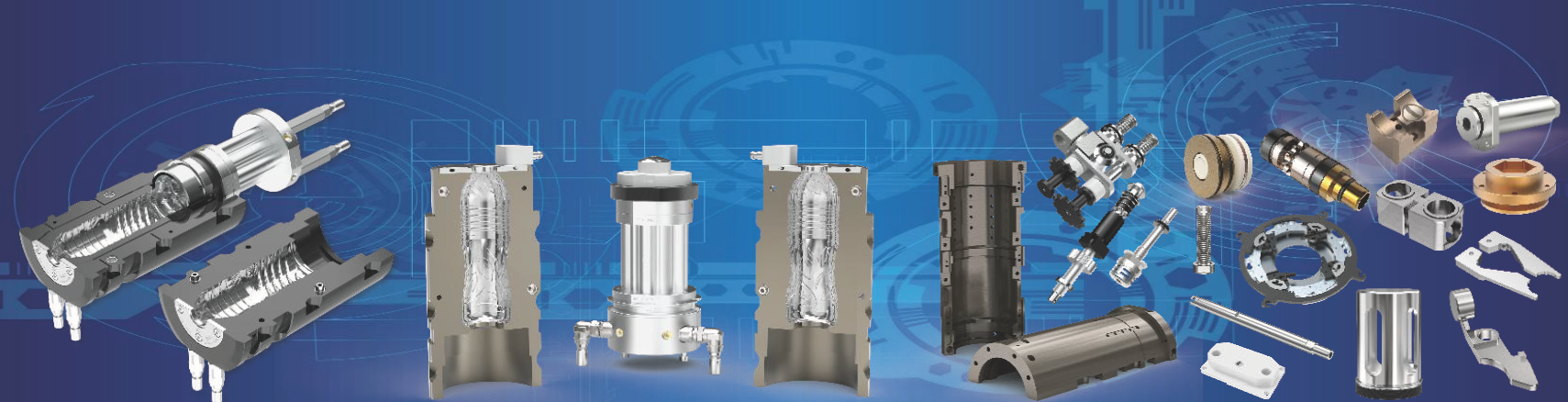
Stretch blow molding dies and extrusion blow molding dies are core equipment for plastic bottle forming. Due to their differing process principles, they are suitable for diverse production requirements. Understanding the differences between the two is crucial for rational selection.
The process principles fundamentally differ. Stretch blow molds employ a “two-step” molding process: first, PET raw material is injection-molded into a preform, then the heated preform is axially stretched using stretch rods within the mold, while high-pressure air is introduced to complete radial blow molding. This process aligns the molecular structure of the material, significantly enhancing the bottle's strength and transparency. In contrast, extrusion blow molds use a “one-step method,” directly extruding molten plastic into a tubular preform via an extruder, followed by mold closure and air injection to form the bottle, eliminating the need for preform preparation and simplifying the process.
The structural design and operational characteristics of the two types of molds differ significantly. Stretch blow molds require precise stretching guidance mechanisms and temperature control systems, with higher surface precision requirements for the mold cavity (Ra ≤ 0.02 μm) to ensure the bottle's transparent texture. Extrusion blow molds have a relatively simple structure and do not require complex stretching components, but precise control of the preform wall thickness uniformity is necessary. In terms of production efficiency, stretch molds are suitable for high-speed production with multiple cavities, while extrusion molds are more suitable for small-batch flexible production.
Each type has its own specific applications. Stretch blow molds, with their high strength and transparency, are widely used for thin-walled, pressure-resistant packaging such as mineral water, carbonated beverages, and edible oil, particularly for standard bottle sizes ranging from 500ml to 2L. Extrusion blow molds, with their high forming flexibility, are better suited for producing irregular-shaped bottles, large-capacity bottles (such as 5L or larger chemical drums), and polyethylene (PE) containers, and are widely used in the fields of daily chemical cleaning and pharmaceutical packaging. Additionally, for packaging requiring light protection, extrusion blow molds can more conveniently achieve multi-layer co-extrusion processes.


