


 cxl@jihengfeng.com
 Español
 Français
 日本語
日本語
 العربية

- Blow Molding Die and Equipment Compatibility Adjustment: Technical Measures to Improve Production Stability
- Key Factors for Extending the Lifespan of Blow Molding Dies: 5 Essential Points to Avoid Common Operational Mistakes
- Stretch Blow Molding Dies vs. Extrusion Blow Molding Dies: Process Differences and Application Scenarios Comparison
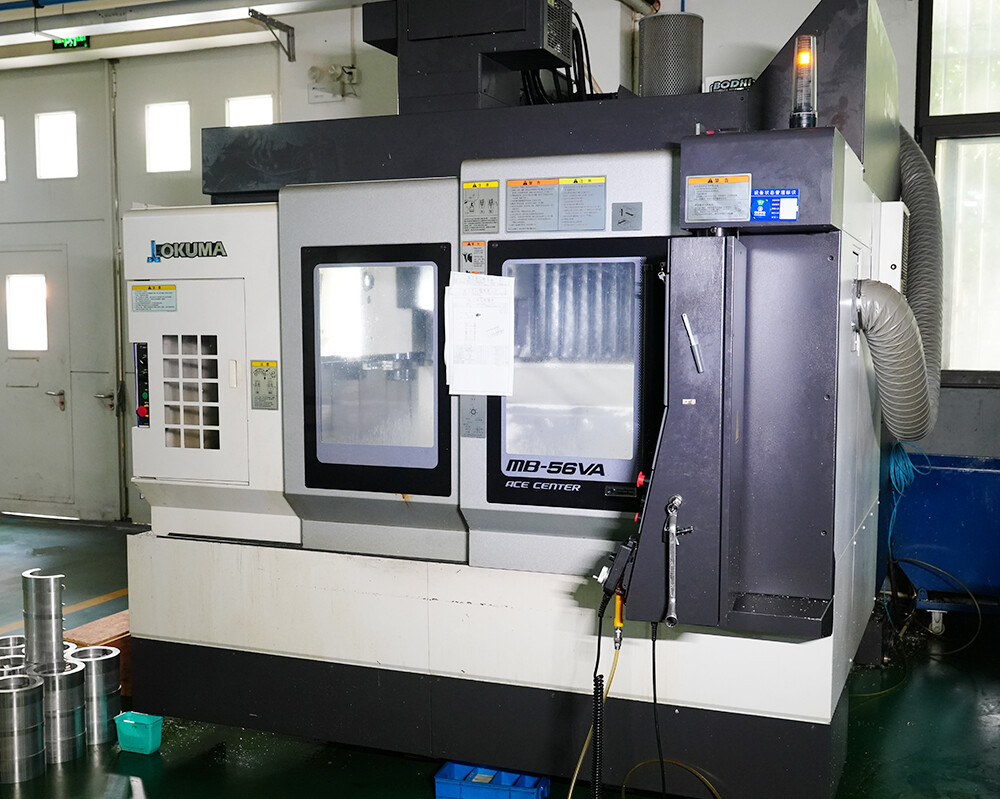
Blow Mold Machining—Okuma MB-56VA/B 3-Axis Machining Center (Japan)
- Category:Production equipment
- Hits:118次
- Release Date:2025-08-19
- Share:
- Details
In the cutting logic of a 3-axis machining center, a 30,000 RPM spindle speed is not aimed at achieving extreme material removal rates, but rather at realizing High-Speed Machining (HSM). The extremely high speed, combined with a micron-level feed per tooth, can reduce the single-point cutting force to an absolute minimum. As it rapidly traverses over a long stroke, the contact time between the tool and the workpiece is extremely compressed, and the cutting heat is carried away by the chips before it can conduct into the mold base. This thermodynamic isolation effect is the physical prerequisite for achieving a stable 0.005mm accuracy.
The engineering difficulty of a large-stroke structure lies in the cumulative pitch error and thermal elongation caused by long guide rails. The core advantage of this Okuma machine is that its high dynamic response capability of the spindle and servo systems can maintain extremely low following errors during long-distance rapid traverses, suppressing micro-vibrations. This combination of a large stroke and high dynamic accuracy enables us to efficiently undertake the manufacturing of molds and spare parts for blow molding machines, filling machines, and labeling equipment that are compatible with brands such as Sidel, Krones, KHS, and Tetra Pak, especially for single-setup molding of large-scale structures like large base plates and multi-cavity mold frames, completely eliminating joint misalignment caused by stroke limitations.
From the perspective of process economics, for a large number of medium and large parts dominated by 2.5D features, 3-axis equipment holds an irreplaceable efficiency advantage. Compared to the complex vector calculations and lengthy preparation times of multi-axis equipment, toolpath generation and clamping datum setup for 3-axis machining are much more straightforward. When facing the subcontracting needs of small-batch, multi-variety packaging machinery components, this equipment characteristic of low changeover costs and high utilization rates forms a crucial foundation for the workshop's agile manufacturing capabilities.


