


 cxl@jihengfeng.com
 Español
 Français
 日本語
日本語
 العربية

- Blow Molding Die and Equipment Compatibility Adjustment: Technical Measures to Improve Production Stability
- Key Factors for Extending the Lifespan of Blow Molding Dies: 5 Essential Points to Avoid Common Operational Mistakes
- Stretch Blow Molding Dies vs. Extrusion Blow Molding Dies: Process Differences and Application Scenarios Comparison
Blow Molding Tooling - Doosan Machining Center
- Category:Production equipment
- Hits:132次
- Release Date:2025-08-19
- Share:
- Details
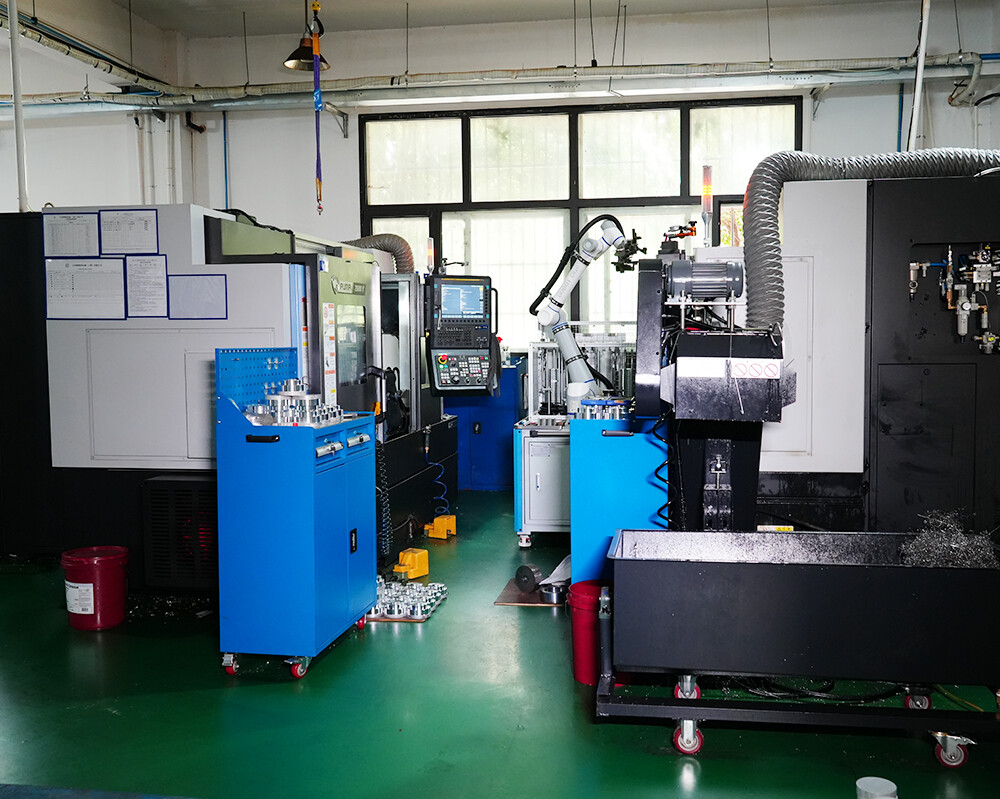
The engineering value of a standard vertical machining center lies not in functional stacking, but in the rigidity reserve of its basic components. The high-density cast iron bed of the Doosan machining center, combined with an optimized ribbing layout, builds extremely high structural damping. When executing interrupted cutting processes such as thread hole drilling and tapping or slot milling, this physical damping effectively absorbs the high-frequency vibration caused by cutting impacts, suppressing the micro-deformation of the spindle head in the Z-axis direction, ensuring the machine maintains stable geometric accuracy even during long-term operation.
In batch subcontracting scenarios, achieving single-part accuracy is only the baseline; the true engineering difficulty lies in controlling the dimensional variance (scatter) of the entire batch of parts. When this equipment handles multi-hole drilling and tapping as well as 2.5D profile milling, the stable cooperation between the ball screws and guide rails compresses the microscopic deviations of every reversal and positioning to a minimum. This control capability for extremely low variance in hole system positional accuracy and profile dimensions enables us, during batch manufacturing of molds and spare parts for blow molding machines, filling machines, and labeling equipment compatible with brands such as Sidel, Krones, KHS, and Tetra Pak, to guarantee the assembly interchangeability of any randomly sampled batch, completely eliminating the risk of batch tolerance drift.
Furthermore, the stable, high-rigidity cutting environment makes the tool wear curve exhibit a highly linear predictability. Process engineers can thereby establish precise tool life management models, avoiding sudden dimensional out-of-tolerances caused by micro-chipping of the tool mid-batch, and further locking in the lower limit of the yield rate for scaled deliveries.


