


 cxl@jihengfeng.com
 Español
 Français
 日本語
日本語
 العربية

- Blow Molding Die and Equipment Compatibility Adjustment: Technical Measures to Improve Production Stability
- Key Factors for Extending the Lifespan of Blow Molding Dies: 5 Essential Points to Avoid Common Operational Mistakes
- Stretch Blow Molding Dies vs. Extrusion Blow Molding Dies: Process Differences and Application Scenarios Comparison
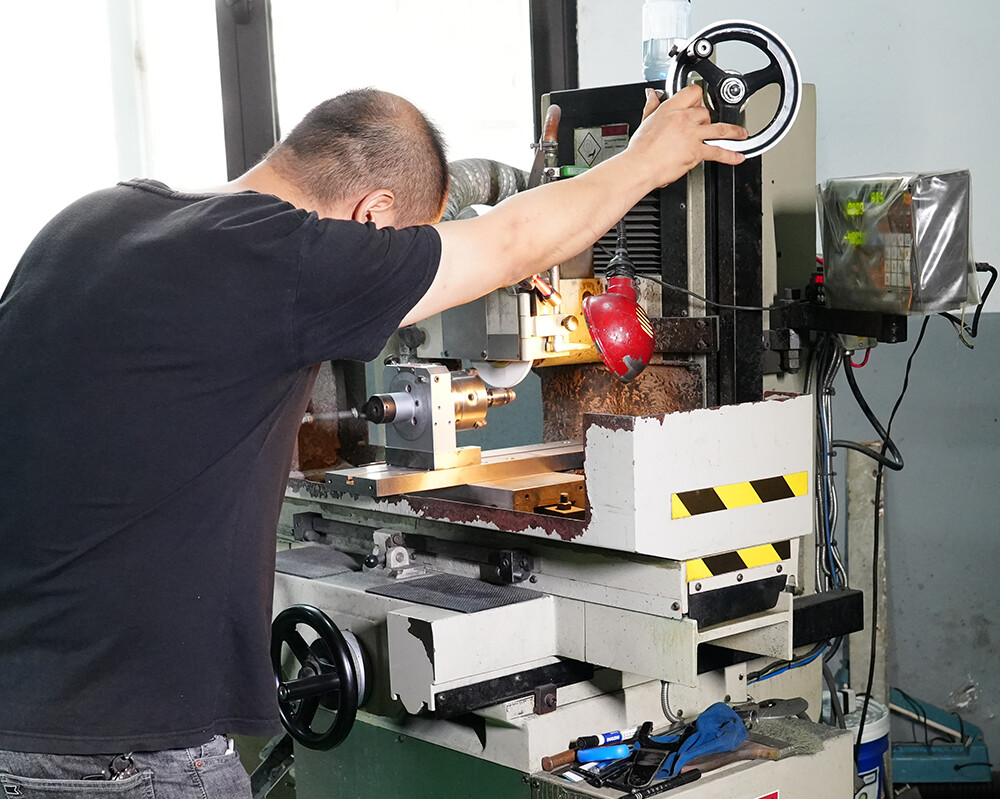
Blow Mold Machining—Okamoto Planer Grinder (Japan)
- Category:Production equipment
- Hits:124次
- Release Date:2025-08-19
- Share:
- Details
In the process chain of precision manufacturing, the physical nature of surface grinding is fundamentally different from the preceding milling or turning. Milling is a macroscopic chip-breaking process that inevitably introduces cutting heat and residual stress; whereas the Japanese Okamoto ACC350II precision surface grinder utilizes a microscopic plowing and sliding mechanism with a negative rake angle, where the abrasive grains of the grinding wheel remove material at the micrometer level. This extremely low specific cutting energy does not alter the internal stress distribution of the workpiece matrix, which is the physical prerequisite for achieving a machining accuracy of ±0.001mm.
In the operation of high-end packaging equipment, the engineering significance of extreme flatness is not merely about meeting dimensional standards, but about achieving "hydrostatic sealing" on rigid mating surfaces. When two metal flat surfaces reach a micrometer-level fit state, the mating surfaces can block the leakage of high-pressure fluid or gas without requiring any sealing gaskets. It is precisely based on this machining capability of extremely low surface waviness and micrometer-level flatness that we can excellently complete the manufacturing of molds and spare parts for blow molding machines, filling machines, and labeling equipment that are compatible with brands such as Sidel, Krones, KHS, and Tetra Pak, specifically for core structural components like hydraulic valve blocks and precision water distribution plates that demand absolute surface conformance.
Furthermore, paired with a punch former attachment, the process boundaries of this equipment are greatly extended. It breaks through the limitation of traditional surface grinders that can only process flat surfaces, utilizing a high-precision indexing device to engage in a meshing motion with the peripheral surface of the grinding wheel, allowing for the direct grinding of outer circles and polygonal (such as square, hexagonal) cross-sections. This "one machine, multiple uses" process solution, when machining irregular punching heads or locating pins for filling machines, eliminates clamping errors across different equipment, ensuring the dual convergence of polygonal cross-section symmetry and dimensional accuracy.


